

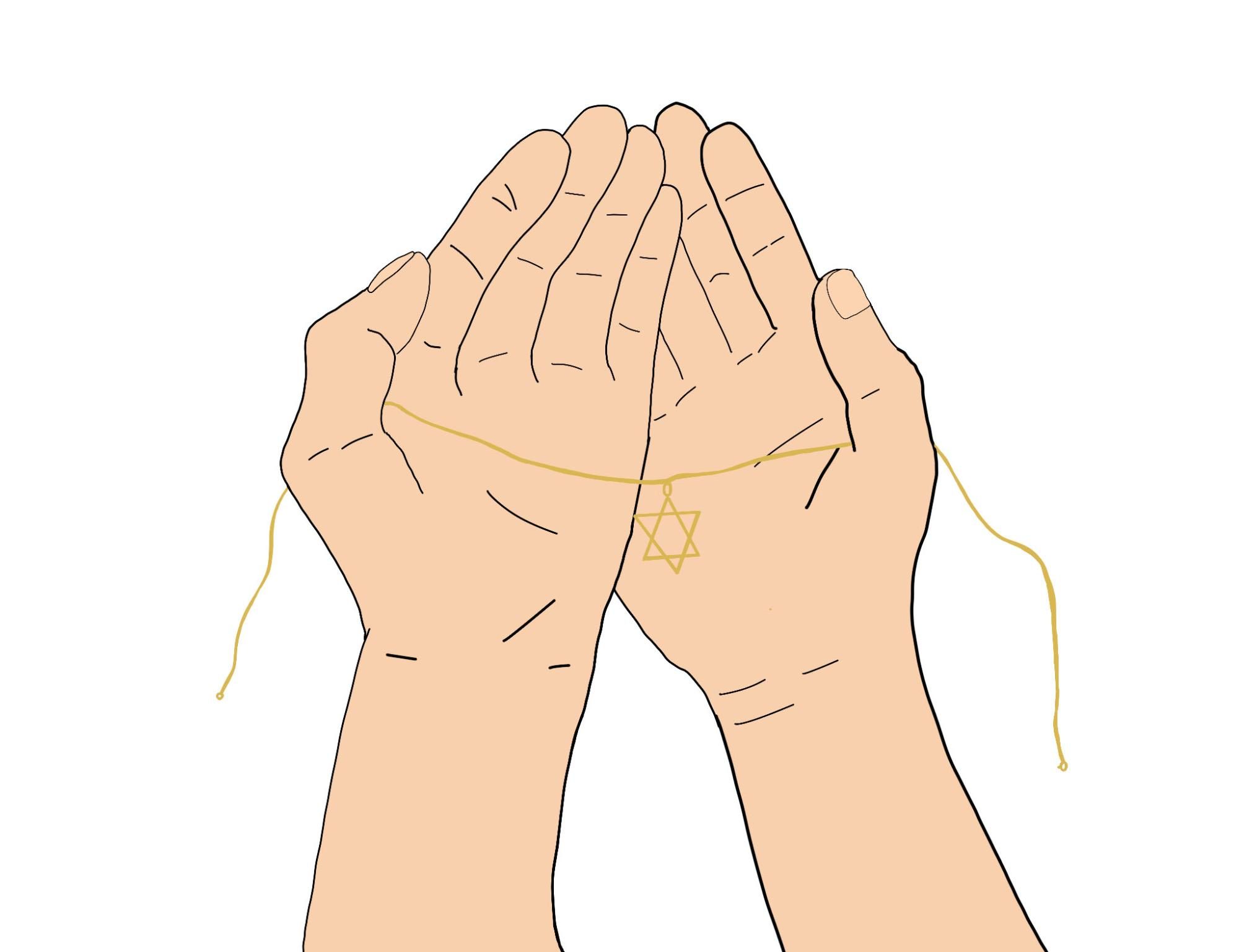
At protests on college campuses across the country, students and faculty blockade Jewish students and their living spaces, preventing them from going about their daily lives. Unlike most churches, mosques and other places of religious worship, many synagogues around the US now have teams of full-time security guards due to rising violence. Even at school, Jewish students are criticized for their Jewish identity and mocked behind their backs.
In fact, just two years ago UCLA protesters prevented students who were wearing Jewish symbols like the Star of David or the Israeli flag from maneuvering around campus. According to the New York Times, the university provided the barricades that were used to block Jewish students from getting around and authorized security guards to prohibit Jewish students from passing. Students were only allowed to pass if they proclaimed they were against the existence of the State of Israel.
Jewish students and community members all over the globe are dealing with rampant antisemitism at an unacceptable rate. This antisemitism is often rooted in misinformation and a lack of understanding about Jews and the State of Israel.
Unfortunately, this reality also exists on our own campus.
My Experience
During our history unit on the Middle East, while I was walking in the hall, someone told me that if Israel didn’t exist, they wouldn’t have to go through the struggle of learning about all the major conflicts in the Middle East.
This brash, offhanded comment felt deeply personal to me. Because even though I could have brushed it off as a joke, it denigrated the country that my family currently lives in — a country that many fled to for safety after their lives were put at risk by antisemitic actions. If we set aside the broader Middle East and focus only on Israel’s military actions, saying that Israel should not exist because conflict followed would be like claiming any country involved in war should not exist. That logic is clearly flawed.
This perspective also highlights a gap in the current history curriculum. Leading students to believe that every war in the Middle East was caused by Israel is largely inaccurate and oversimplifies a complex history.
Misunderstanding Zionism
A common misconception is that Zionism is the idea of the creation of a Jewish state through the colonization of Palestine. This claim, made by people who aren’t Zionists, overlooks so much context and is wrong.
The real definition agreed upon by almost all Zionists is the Jewish right to self-determination in their ancestral homeland of Judea, currently located in the Land of Israel, previously known as Palestine. Judaism as a word comes from the land of Judea — the land that Jews are genetically from and have been living in for thousands of years.
The reason many people think Zionists are European colonizers stems from the fact that Jews were expelled from the land of Judea by a variety of foreign leaders beginning in the 500s BCE by the Babylonians and spanning the next 2000 years. In this time, Jews dispersed all over the world and created what is known as the Jewish Diaspora, or Jews living outside of the Land of Israel.
It wasn’t until the turn of the 20th century that Jews began to move back to the Land of Israel to escape persecution and discrimination in foreign countries. The Jews who were expelled did not return to colonize the land; many came back to their ancestral homeland after realizing the places they had been forced to move to were no longer safe.
Many people also misunderstand the depth of Judaism, because it is not just a religion; Judaism is an ethno-religion. Most Jewish people who did not convert to Judaism trace their roots all the way back to that same land of Judea. There are three main ethnic divisions of Jews: Ashkenazi, from Central and Eastern Europe, Sephardic from the Iberian Peninsula (Spanish/Portuguese/Mediterranean) and Mizrahi from the Middle East and North Africa, along with other groups like Beta Israel from Ethiopia.
Zionism also doesn’t mean standing by every action of the Israeli government. Most Zionists are critical of the Israeli government, especially regarding recent conflicts.
It is not antisemitic to dislike the Israeli government, but it is to deny Jews the right to self-determination, a right that is given to other groups all over the world.
Why Israel Is Treated Differently
Israel is currently one of the only countries in the world whose legitimacy is being questioned. We know of a lot of other counties with major issues that have never faced any of this type of discussions. Why is that? Why is Israel so different?
This is where so much of today’s antisemitism comes from: people saying they are anti-Zionists, without knowing what Zionism even is.
Social Media and Bias
Even though some antisemitism is created through problematic school curriculum, it is circulated much faster and more easily online. Social media is currently the main source of information for many teens all around the world. According to a study by the Media Insight Project, 57% of teens ages 13 to 17 get their news from social media at least once a day.
So when people are exposed to only one side of an argument or inaccurate information, they are more likely to base their own beliefs on it. My algorithm on social media shows me antisemitic and anti-Zionist clips often, usually involving prejudiced stereotypes or criticizing Jews for actions of the Israeli government.
What Schools Must Do
This is why it is important our school district make workshops dedicated to educating both students and teachers about what antisemitism is and how to address it. We can achieve this through partnering with local Jewish organizations or by doing proper research when making curriculum and setting standards. Schools and educators should be encouraged to properly show students how to check the validity of the information they are being exposed to, including how to notice bias in sources.
It is also important schools hold themselves accountable and report antisemitic incidents rather than dealing with them quietly. When antisemitic issues are brushed off, people think there isn’t as much that needs to be done to address them. Some Jewish students feel hesitant to report incidents, fearing backlash from peers and teachers who are in control of their grades.
At protests on college campuses, Jewish students are blocked from classrooms and dorms. At synagogues, security guards now stand watch where worshippers once entered freely. In schools, Jewish students still hear discriminatory comments whispered behind their backs. These are not disconnected events. They are pieces of the same story. The question is whether we will recognize it for what it is and whether we are willing to say that hatred toward Jews deserves the same outrage as hatred toward everyone else.