
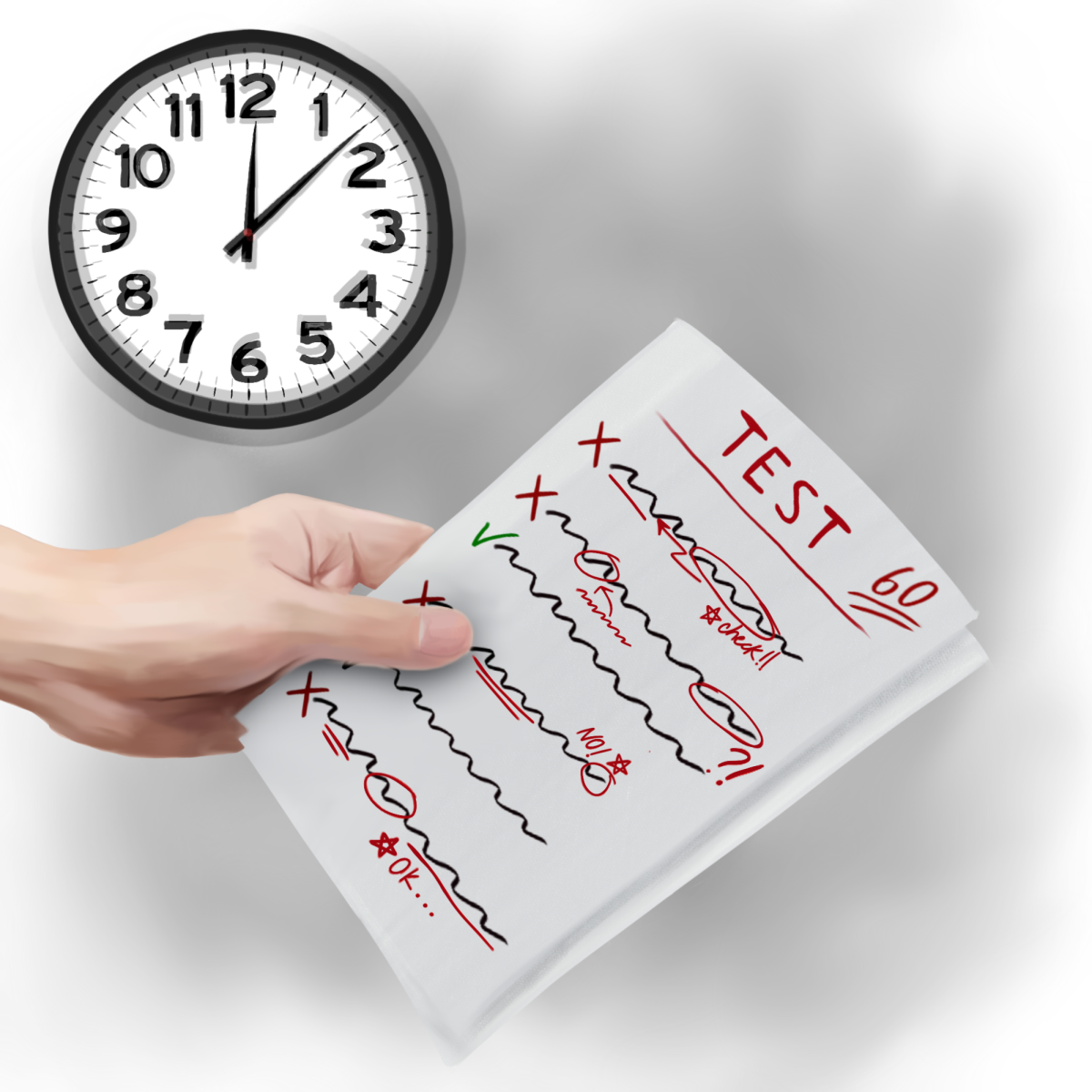
As I looked through my English essay last year, sprinkled with red marking and corrections, I went over my mistakes and missed learning targets of the unit. Having completed the essay over two weeks before, I had long forgotten what my thesis had been, let alone my purpose and evidence. Looking back, I couldn’t remember my thought process while writing the essay and was unable to analyze how my test-taking strategies had worked out.
Receiving feedback on essays and exams from teachers is the key to improvement in any course: their explanations and corrections help students notice what they need to improve and create a technique to do so. Given this, receiving feedback in a timely manner is essential to student improvement and understanding of the material.
These struggles I experienced reviewing my essay can also be applied to other classes I have taken, dating back to freshman year. Whether it’s forgetting what questions I had blanked on during the history quiz, what problems I had struggled with on the math test or what explanation stumped me on the science lab, I have faced numerous situations like this, and I know many of my peers have encountered this as well.
In addition, according to the University of South Carolina’s Center for Teaching Excellence, timely feedback is necessary to ensure students respond and remember the experience about what is being learned more positively. “If we wait too long to give feedback, the student might not connect the feedback with the learning moment,” the study said.
Just like when you are interrupted and lose your train of thought, students need to receive feedback to continue their momentum and not constantly have to reflect weeks and weeks back to previous exams after they have long moved on.
Beyond students having difficulty analyzing their test performance afterwards, when teachers return tests after the next unit’s assessments, it is even more difficult for students to progress in cumulative classes when they haven’t fully understood or improved on the previous topics.
Especially when finals come around, understanding each individual unit in cumulative courses is the key to a successful understanding and presentation of the material at the end of the semester or year.
When it comes to exams, there’s no doubt teachers get backlogged with dozens of tests from each period and course. From the time it takes to grade consistently and schedule makeups, teachers have a lot on their plates. But timely feedback is what allows students to improve.
Just like we have deadlines for assignments and tests, teachers should similarly schedule and communicate achievable and efficient deadlines.
According to Indiana University Bloomington’s Center for Innovative Teaching & Learning, “Feedback needs to be both ongoing and timely. For example, students should have specific feedback about their performance on a rough draft of a paper well before the final draft is due.”
Furthermore, many core classes at Paly have two main types of teacher feedback: formative and summative. Formative feedback includes all comments provided during the learning process, including homework, checks of understanding, and assignments, while summative feedback includes all final evaluations such as essays, tests and exams.
Although receiving formative feedback is important to continue advancing beyond learning errors, many times formative feedback tends to provide limited and broader comments. Therefore, summative feedback becomes the major way to receive extensive and individualized corrections from teachers in order to progress.
While many teachers will release students’ grades on Schoology in a timely manner, the feedback attached to that grade is just as, if not more, important. While a grade is a good indicator of one’s overall progression in a class, grades don’t help with improvement or growth; the individual feedback and comments do. Even worse, for courses that don’t release scores or feedback quickly, students are unaware of their standing in the class. I strongly encourage teachers to provide feedback to students in a timely manner with communicated, achievable deadlines within two weeks. Teachers can attain this even with hundreds of students by utilizing standardized grading rubrics and preparing grading guidelines with points which are each specialized to certain criteria. These quick grades and individualized comments will allow students to learn from their mistakes and missed targets in order to accelerate overall student improvement.
