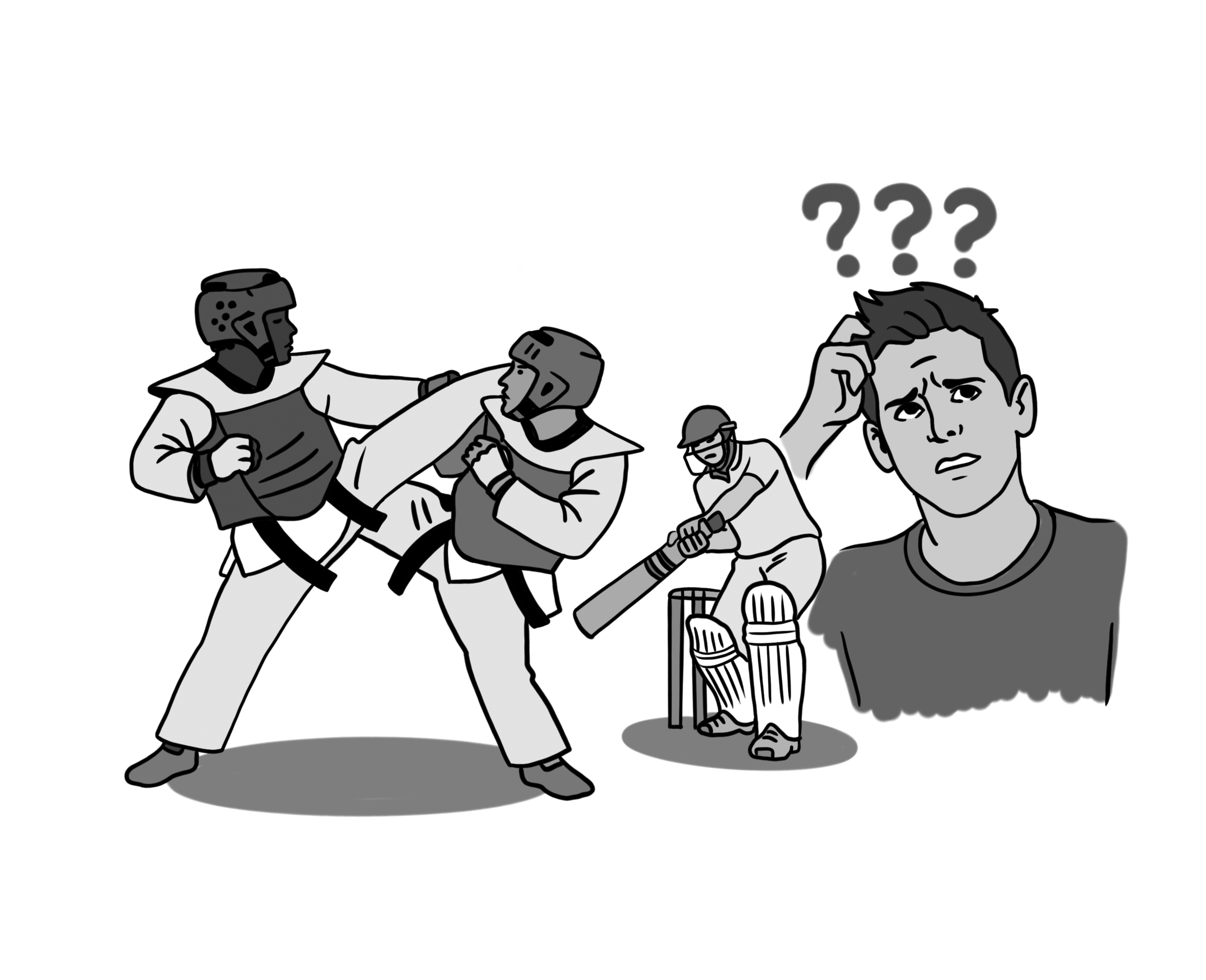
As junior Aina Arnquist talks to her friends near the library, she struggles to explain the rules of Taekwondo — a sport popular in South Korea, but less well-known in America. For Arnquist, an athlete with a third degree black belt, teaching her friends the nuances of Taekwondo is almost as challenging as the sport itself.
“A lot of people know about sparring, so everyone just expects that that’s what everyone does, but I actually don’t even do sparring,” Arnquist said. “That gets kind of complicated, so half the time I don’t even mention the difference (between sparring and poomsae in Taekwondo).”
Arnquist isn’t alone in this struggle; other students face similar difficulties introducing sports that are less familiar to their peers in America.
Junior Aadi Tripathi said talking about cricket with his peers can be difficult because they often compare it to popular American sports.
“I’ve tried explaining it to my friends, and luckily, they were open-minded,” Tripathi said. “They also kind of saw it from a baseball perspective, which I found interesting.”
Even with the comparisons to American sports like baseball, Tripathi said cricket’s complexity can make it hard for people unfamiliar with the game to understand it.
“It’s pretty interesting how people here don’t really know about it,” Tripathi said. “If you look at the rules, is pretty different.”
Junior Aeshaan Singhal said cultural differences in sports can shape how students experience the games.
“(With cricket,) every country has its team, and they’re very motivated towards it,” Singhal said. “With sports in the US, it’s more that cities have their own little team that they root for, like the 49ers in San Francisco.”
But fans of these sports say they find ways to follow them, even from abroad. Tripathi said he and his family wake up early to catch India’s cricket matches, despite the different timezones.
“My parents would wake up early to watch games with their friends; people are really passionate about it,” Tripathi said.
Arnquist said she thinks Taekwondo is not as popular in the US because its history begins in another country.
“It didn’t originate here, but a lot of sports that started here early on, like baseball and football, just became part of American culture and grew really big,” Arnquist said. “Taekwondo was introduced more recently through Korean immigrants and things like that, so it’s been in this country for a much shorter time.”
Despite not being widely understood by Americans, Arnquist said Taekwondo teaches athletes skills that extend beyond the mat.
“In general, because of the values it emphasizes, like respect, hard work and discipline, (it is) something a lot of people want to learn and work on,” Arnquist said. “I think that’s a big reason why it will become more popular.”
Singhal, though, said he does not think cricket will become widespread in America because of cultural differences.
“I don’t think it’s going to become more popular just because the cricket team of the US doesn’t seem to be that good, and I don’t think there’s much hope for improving in the near future, but maybe it is possible with a lot of work,” he said.
But Tripathi holds out hope.
“There are a lot of sports that are growing, and cricket is already very popular outside the US, especially in Asian countries like Southeast Asia, as well as places like New Zealand and parts of Europe,” Tripathi said. “I feel like the U.S. would be a great country to introduce it to.”