
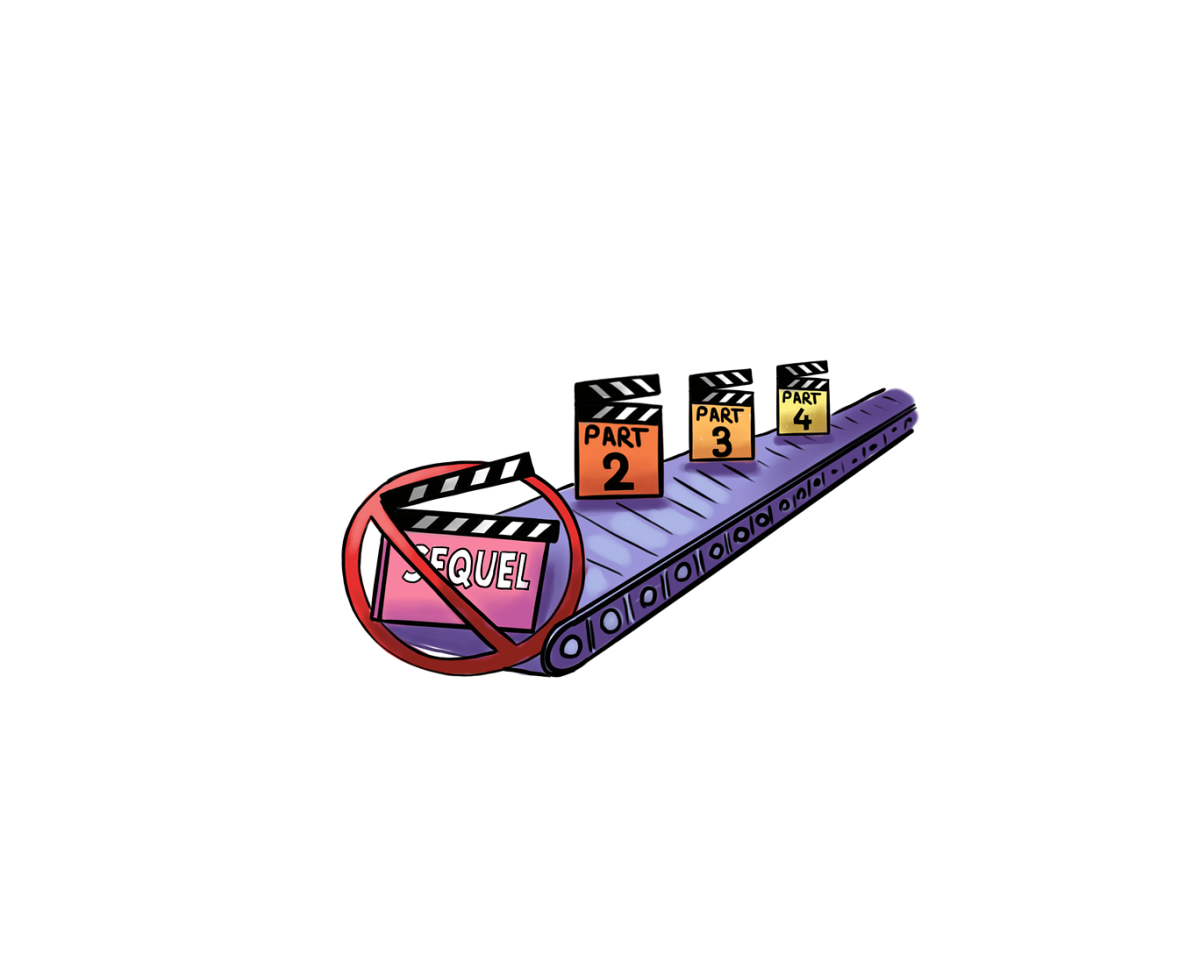
In recent years, Hollywood has discovered a remarkable natural resource: childhood nostalgia. Unlike oil, it never runs out, requires little to no actual exploration and can be extracted simply by adding the number “2” to the title of a formerly loved film.
This tool, while seemingly effective, has degraded dozens of once-legendary film franchises – “The Godfather 3,” “Independence Day Resurgence,” and “Space Jam: A New Legacy,” are a few of many examples of sequels that fell far below the quality of the movies that came before them.
Many of the original films in these franchises were memorable because they told a complete story. By the end of the movie, the characters finish their development arcs, the conflict resolves cleanly and the film ends leaving viewers with a satisfied feeling of closure. But, forcing a sequel produces awkward and misplaced narratives which reopen finished storylines just for some extra profit.
In theory, it makes sense that profit-driven companies are doing this. A study conducted by FilmLocal, an online filmmaking network platform, found the average budget for blockbuster films routinely exceeded $300 million in 2026. After tax incentives, a film needs to generate over $427 million just to break even.
These numbers help explain Hollywood’s attraction towards sequels: Financial risks are seemingly far too high for a movie to flop, so studios prefer recognizable, tried-and-true franchises over new ideas. However, it’s this financial safety that almost always produces bad content. Studios lean on nostalgia as a crutch, and then attempt to do one of two things: play it so safe that a film ends up painfully bland or try to “innovate” on top of a familiar premise and spectacularly ruin it.
More often than not, we end up with a horrible combination of both: some parts of these sequels seem like carbon copies of the original, while other parts veer into downright wild plotlines, leaving the audience bouncing between deja vu and confusion. No amount of nostalgia can save a terrible storyline.
For example, “Jaws,” directed by Steven Spielberg, has a tightly constructed story. The shark wasn’t shown much throughout the film to create suspense, and the plot was kept simple and clean, cementing its legacy as one of the greatest thrillers of all time.
With the conclusion of the film, the conflict was resolved, and the story was complete: there wasn’t much reason to create a sequel.
Hollywood, of course, disagreed.
More than a decade later came “Jaws: The Revenge”, premised upon the absurdity of a shark targeting the Brody family, the same family that it had attacked in the first film. Aside from the awful idea of a shark holding a personal vendetta for over a decade, the film shows us more of ‘same everything’ from the first film: more shark appearances, more reasons to make fun of it, and definitely more nonsense.
The movie completely abandons the suspense of the slow-burning thrill of the original. Instead of building suspense by giving the shark less screen time, the sequel features the shark randomly popping up whenever the plot becomes boring.
The sequel also suffers from a striking lack of innovation. It reuses too many elements of the original, from the Brody family to the shark attacks. The film relies almost entirely on the audience remembering how good the original was.
Jaws is only one example. Consider the fan favorite dinosaur empire “Jurassic Park,” where a sequel missed the mark by neglecting the storyline.
The original was so successful because it felt revolutionary and novel. Audiences who had never seen CGI could now watch a T. rex casually ruin someone’s day in stunning detail without even leaving their seat. Aside from the near-perfect cinematography during scenes such as the reveal of the Brachiosaurus, the T. rex breakout and the raptors in the kitchen, the film explored themes of humanity’s hasty tendency to push technology forward beyond its ethical limits and the dangers of trying to play God.
Compare that to “Jurassic World Dominion,” where the overreliance on nostalgia 30 years overdue was so excessive it felt as though the only redeeming quality about it was the cast. The film attempted to juggle multiple storylines and held onto the franchise’s original premise, while adding new villains and mutated locusts. The result was a film that crammed together every possible half-baked plot point. It felt like the franchise’s iteration of a Frankenstein monster — which the franchise would’ve done much better without.
Still, we’ve seen Hollywood produce its fair share of sequels that justify their own existence. “The Dark Knight,” for instance, deepened the moral stakes of the story “Batman Begins,” introducing The Joker, one of cinema’s most memorable villains. “Kung Fu Panda 2” built upon the charm of the original while adding a more emotional layer introducing Po’s past.
Similarly, much of the “Star Wars,” “John Wick,” and “Indiana Jones” sequels expanded their respective universes and deepened stories by avoiding repeat original adventures without innovating to the point of absurdity.
The difference in these cases is that the sequels respected the basic principles set by the originals. Beyond that, they either expanded the story in meaningful ways or kept the formula simple enough that the familiarity remained enjoyable.
However, the problem is not necessarily that Hollywood produces more bad sequels than good ones. The problem is that when a sequel fails, the damage is noticeable. While a good sequel may extend the legacy of an already successful title, a mediocre sequel drags a beloved original down with it. When audiences watch a disappointing follow-up, they think of it less as a bad movie and more of it as a franchise they once loved dissolving in front of their eyes..
While nostalgia may sell the ticket, it will never be able to fully write the story. Hollywood would do a lot better if they remembered the difference.
